Pigment Index › Blues
The blues
Blues are rare. Blue very rarely appears in the natural world, and painters have always had to work hard for it. Lapis lazuli was the most important: mined in Afghanistan for 6,000 years and ground into ultramarine. Azurite, the other great natural blue, has a nasty habit of turning green, particularly in oil. The natural blues are just not very stable, which is why painters have spent centuries looking for better ones.
Pigments in this family
Ultramarine
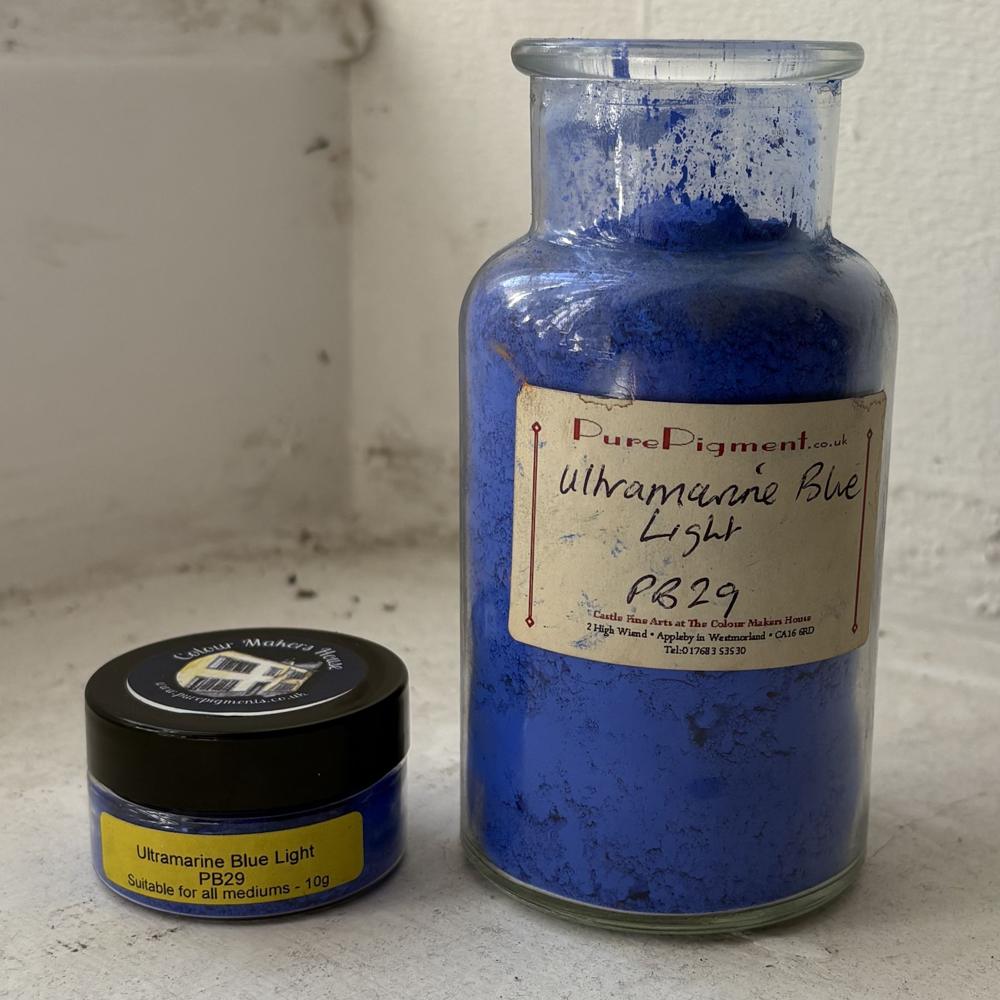
Ground from lapis lazuli, the most important blue of all. Synthetic ultramarine was made at Backbarrow, at the foot of Windermere, until 1981. We sell several variations, and it stars in the Elusive Blues and Windermere Blues boxes.
Blue Verditer
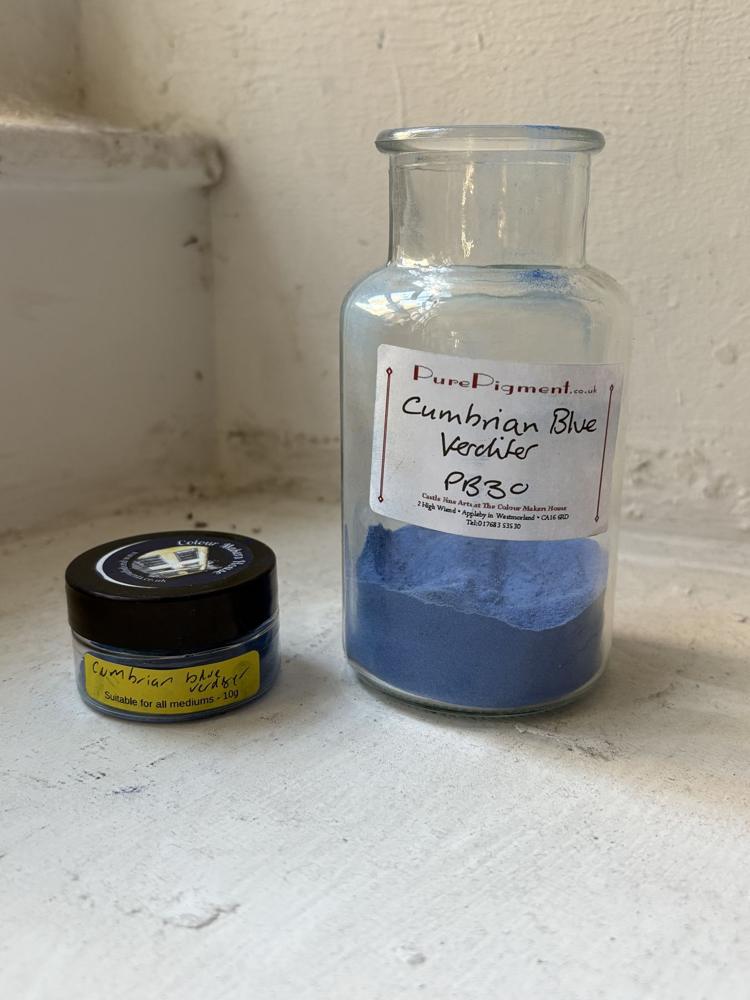
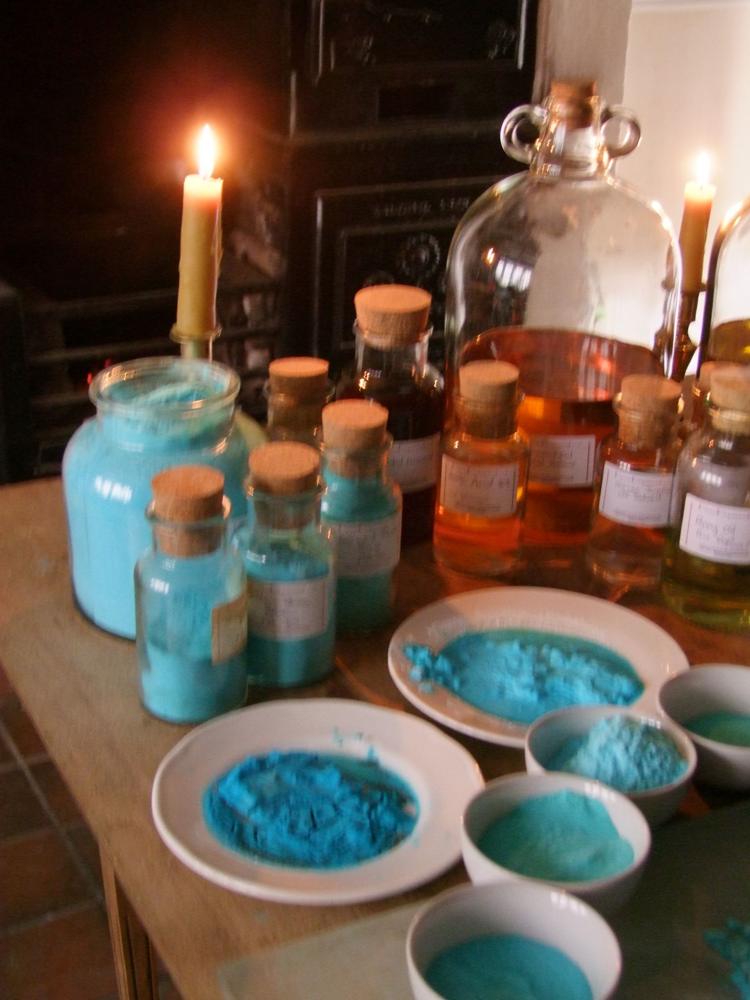
A copper blue made by precipitation.
Blue Bice
Azurite
A natural copper blue that can turn green, especially in oil.
Buy it, make it, hear it, read it
Buy it
The Blues
Ultramarines, Prussian Blue and the copper blues, in 10g and 50g tubs and 22ml vials, plus the Elusive Blues and Windermere Blues gift boxes.
Shop the bluesMake it
Blues & Greens workshop
Make the blues yourself at the bench, from ultramarine to the copper blues, and take home the paint.
See the workshopHear it
The Blue Talk
From lapis lazuli to Backbarrow's blue mill, for societies, WIs and clubs, or as part of a group visit to the House.
Talks & GroupsRead it
Sources
- Lapis lazuli mined in Afghanistan for 6,000 years
- Azurite turning green in oil
- Lake District National Park Authority, Discovering Industrial Sites in the Lake District: Leven Valley (Ultramarine Blue Works, Backbarrow, 1895–1981)
Still being made here, by hand.