Pigment Making
Earth, mineral, insect: colour before the paint tube.
For most of human history, nobody bought colour. They dug it, crushed it, washed it, cooked it and ground it. At The Colour Makers House those methods are still worked by hand, from Stone Age friction pigments to the lake pigments of the Elizabethan painter's shop.
Three sources of colour
Where every colour on the shelf begins
Earths
Ochres and iron reds
Iron-rich clays from the Eden Valley and the North Pennines. Appleby Red comes from three sites, each giving a subtly different red. Yellow ochres come from Alston and Ormside. Heat a yellow ochre and it turns red: calcining, one of the oldest colour changes people ever learned to make.
Minerals
Blues and greens
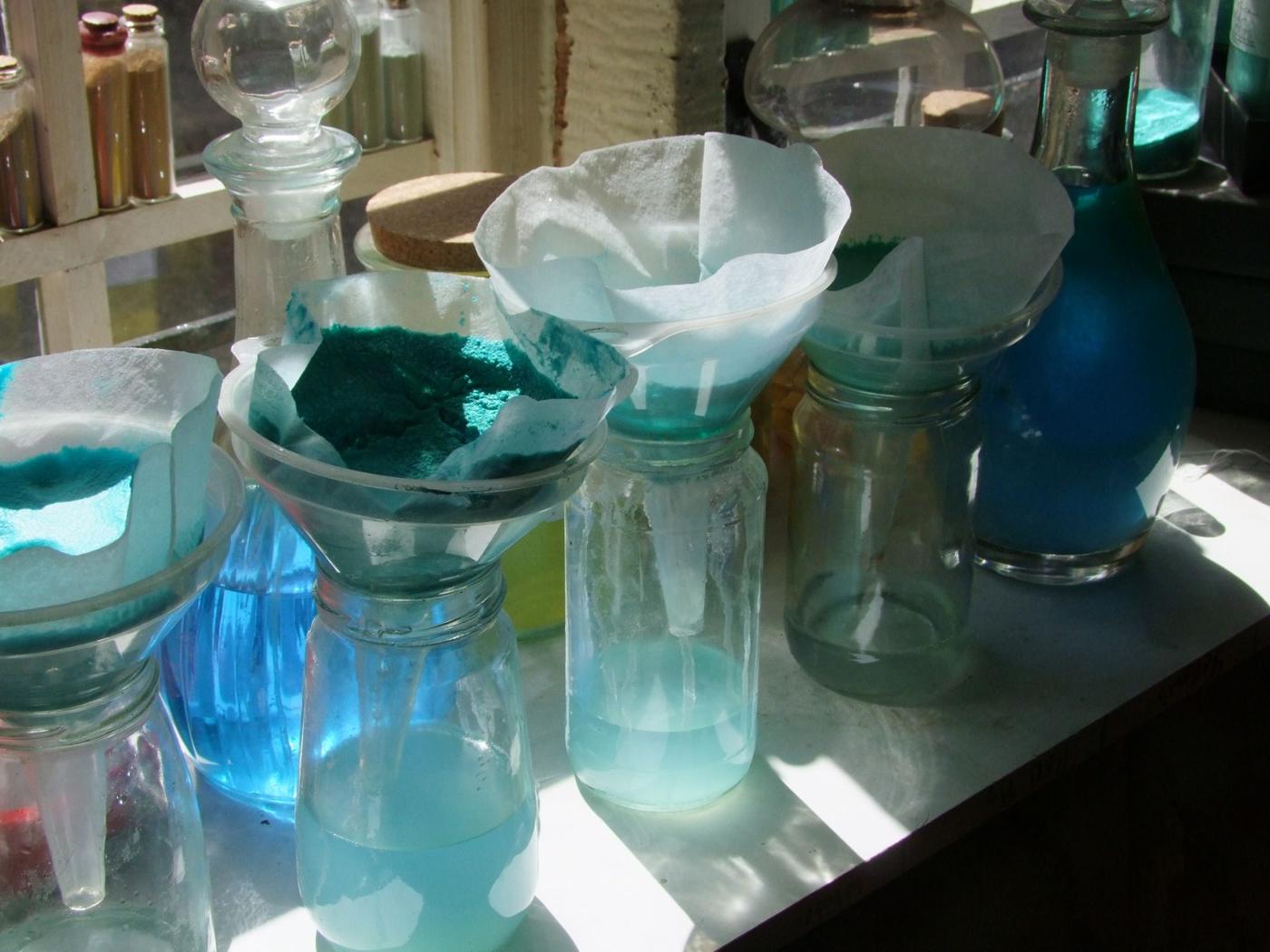
Malachite and azurite, lapis lazuli and the copper salts that gave medieval painters verdigris and verditer. These are the elusive colours, hard to find and harder to make, and for centuries they were priced to match.
Insects
Cochineal scarlet
A tiny scale insect from the Americas that, once it reached Europe, gave the richest reds of the age. Lady Anne Clifford's father, George Clifford, 3rd Earl of Cumberland, was among the privateers chasing Spanish cargoes of it. Today it becomes carmine lake on the bench here.
The process
From the ground to the brush in five steps
- 1GatherEarth from a known site, mineral from a known mine, insect from a trusted source. Every colour carries the name of where it came from.
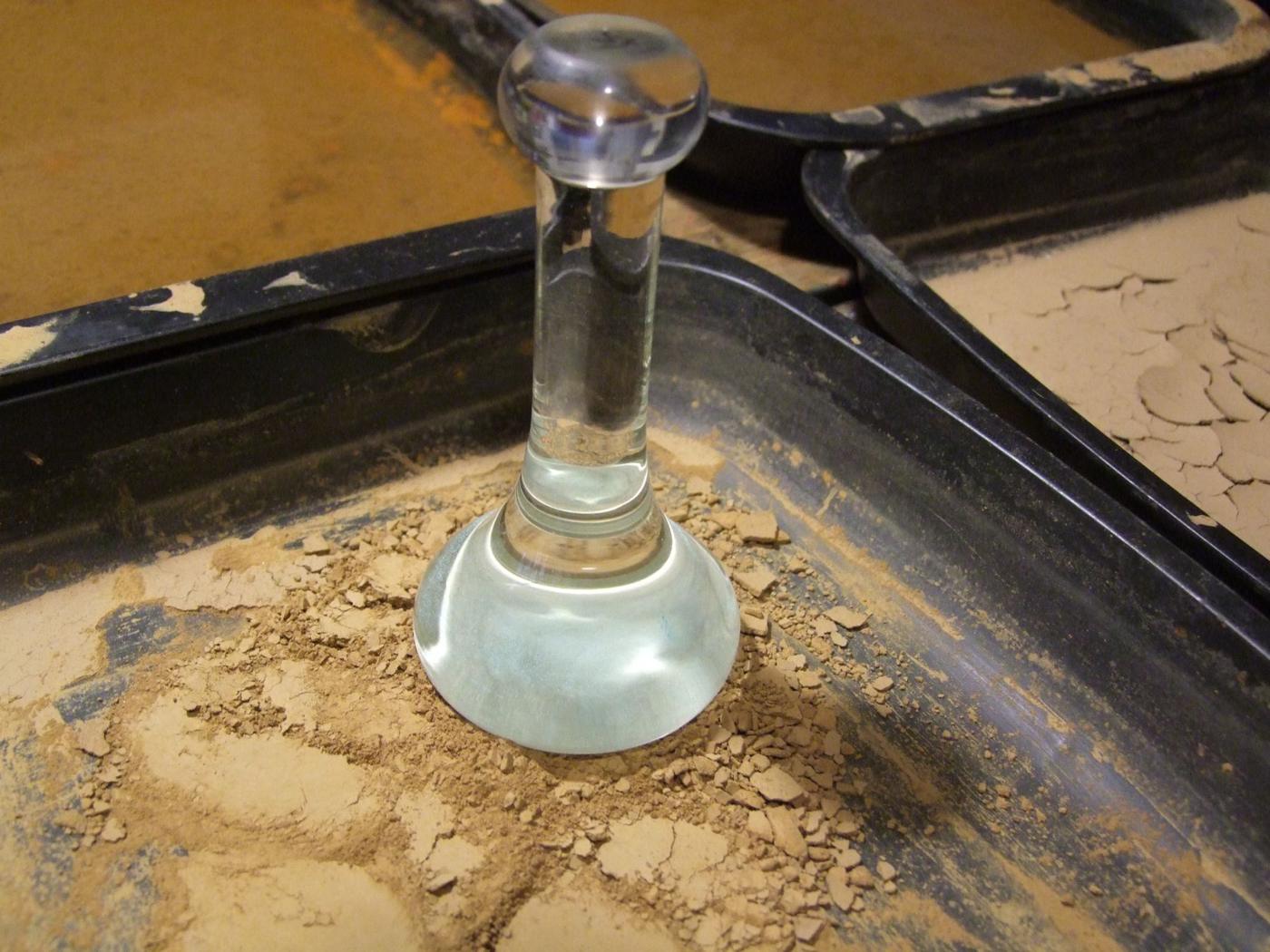
- 2Wash and settleRaw earth is mixed with water and left to settle. Grit sinks first and the fine colour stays suspended, to be poured off and dried.
- 3TransformSome colours are cooked, some are precipitated from solution, some simply crushed. This is where the alchemy happens.
- 4GrindDried pigment is ground under a glass muller until every particle is fine enough to hold light evenly.
- 5Bind and paintGum arabic makes watercolour; egg yolk makes tempera. Then the colour goes onto paper or panel, as it has for centuries.
A colour with a long memory
The blue that begins as rusty water
Two clear, faintly rust-coloured liquids. Pour one into the other and a deep, startling blue appears in an instant. That is Prussian blue, first made by accident in a Berlin laboratory in the early 1700s, and the first modern synthetic pigment.
It is one of the moments visitors remember most, and it is shown in both the Earth & Ochres and the Elusive Blues & Greens workshops.
Made here
A few of the colours made at the bench
Swatch colours are approximate.
Why no two are the same
Natural colour has character
Earth dug from one bank differs from earth dug a hundred yards upstream. A lake pigment shifts with the water, the temperature and the patience of the maker. That variation is not a fault. It is the evidence that the colour is real, and it is why artists come here looking for colours with character rather than the flat sameness of a factory tube.
Every jar and every gift box carries the particular character of the batch it came from.
Make it yourself
See 8,000 years of pigment making in The Alchemy Hour, or spend a half or full day at the bench in a specialist workshop.
Still being made here, by hand.